
You’re in the middle of a meeting — no hot flashes at night to blame this time, just you, your blazer, and your best professional composure — when it starts. A slow creep from somewhere deep inside your chest, moving upward with absolutely no regard for your agenda. Within sixty seconds, you’re flushed, fanning yourself with a printout of the Q2 report, and trying to make eye contact with no one.
Then there’s the 2 am version. You bolt awake already sweating, peel off the covers, lie there like a rotisserie chicken waiting to cool down, and just when you’ve finally drifted back off — it happens again.
Same symptom. Wildly different chaos. And if you’ve been wondering whether the daytime and nighttime versions are actually the same thing happening in two inconvenient locations, or whether there’s something meaningfully different going on, you’re asking the right question.
What to Know Before You Read
- Hot flashes and night sweats are both vasomotor symptoms caused by the same hormonal disruption, but they affect your body differently depending on when they hit.
- Nighttime hot flashes (night sweats) cause sleep fragmentation, which creates a cascade of other symptoms, including brain fog, mood swings, and fatigue.
- Daytime hot flashes are typically shorter but can be triggered by specific foods, stress, heat, and caffeine.
- Both types are more frequent and severe in perimenopause than in postmenopause for many women — they do tend to ease up over time.
- There are effective strategies for both, and they’re not exactly the same list.
So What’s Actually Happening?
Hot flashes are vasomotor symptoms. Your body’s temperature regulation system is misfiring in response to declining estrogen levels. The hypothalamus, which acts as your internal thermostat, becomes hypersensitive to tiny changes in body temperature during the hormonal fluctuations of perimenopause and menopause. It interprets normal warmth as overheating and responds by trying to cool you down — fast. Cue the flush, the sweat, the sudden desire to stand directly in front of an open freezer.
This process is the same whether it’s 2 pm or 2 am. The difference is everything that happens around it.
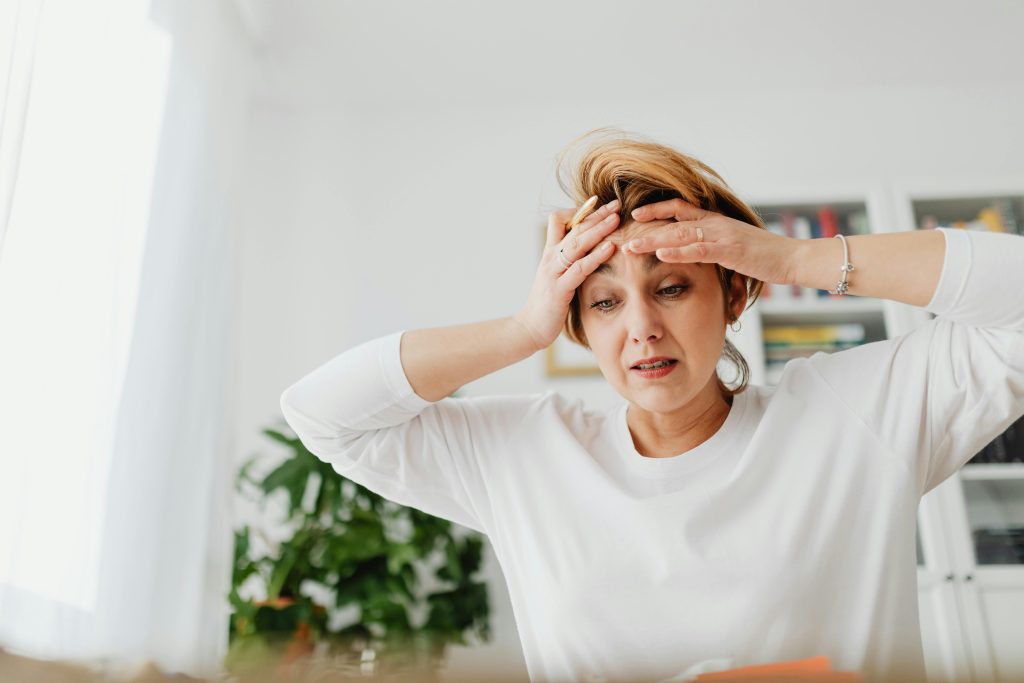
Daytime Hot Flashes: The Public Performance
Daytime hot flashes tend to be shorter — typically lasting between one and five minutes — but they have the added indignity of an audience. They can be triggered by external factors you actually have some control over, which is both good news and slightly infuriating when you realize your morning coffee has been working against you.
Common daytime triggers include:
- Caffeine (sorry)
- Alcohol (also sorry)
- Spicy foods
- Hot beverages
- Warm environments or sudden temperature changes
- Stress and anxiety — which, during perimenopause, is basically the weather
- Tight or synthetic clothing that traps heat
The silver lining of daytime hot flashes is that you can often see them coming if you start paying attention to patterns. Keeping a simple symptom log — even just noting what you ate or did before a flash — can reveal triggers you hadn’t connected.
What helps during the day:
- Dress in breathable, natural fabrics and layers you can peel off without causing a scene
- Keep a small portable fan nearby and deploy it without shame
- Stay hydrated — your body is working hard
- Identify and reduce your personal triggers (a food journal is genuinely useful here)
- Practice slow, deep breathing at the onset — research shows paced respiration can reduce the perceived intensity of a hot flash
- Talk to your doctor about whether HRT or other treatments are right for you
Nighttime Hot Flashes (Night Sweats): The Silent Saboteur
Night sweats are where things get more complicated — not because the hot flash itself is necessarily more intense, but because of what it does to your sleep.
When a hot flash wakes you at night, your body goes through the full arousal cycle: heart rate increases, you sweat, you kick off covers, and you lie there waiting to cool down. By the time you settle back in, you may have been awake for 20 to 30 minutes. Do that two or three times a night, and you are not getting restorative sleep, even if the total hours look acceptable on paper.
This is why women with frequent night sweats so often report brain fog, mood changes, memory issues, and exhaustion that goes beyond tired. It’s not just the hot flashes. It’s the cumulative sleep debt they’re building.
What makes night sweats worse:
- Alcohol within a few hours of bedtime
- Heavy meals close to bedtime
- A warm bedroom (your sleep environment temperature matters more now than it ever did)
- Synthetic bedding and pajamas that don’t breathe
- Stress — which raises cortisol, which disrupts sleep, which worsens hot flashes, which disrupts sleep again
What actually helps at night:
- Lower your bedroom temperature — most sleep experts suggest somewhere between 60–67°F
- Switch to moisture-wicking, breathable bedding and sleepwear (this is worth the investment)
- Avoid alcohol and heavy food in the evenings
- Consider a bedside fan or a cooling mattress pad
- Treat the hot flashes themselves — if night sweats are significantly disrupting your sleep, talk to your doctor. This is a medical symptom, not just a nuisance, and there are effective options, including HRT and non-hormonal medications
The Bigger Picture: Why Both Matter
It can be tempting to white-knuckle through hot flashes — especially if they feel manageable in isolation. But the downstream effects of frequent vasomotor symptoms, particularly nighttime ones, are real and worth taking seriously. Chronic sleep disruption affects everything: cognition, mood, metabolism, immune function, and cardiovascular health. Your hot flashes are not separate from your brain fog. They are not separate from your mood swings. It’s all one system, and it all deserves attention.
Frequently Asked Questions
Are night sweats more serious than daytime hot flashes? Not inherently — but because of their impact on sleep, they tend to have broader effects on overall health and wellbeing. If night sweats are waking you multiple times a night, that’s worth addressing with your doctor.
How long do hot flashes last? The average is around seven years, but this varies widely. Some women experience them for only a few years; others for a decade or more. They typically peak during perimenopause and early postmenopause, then gradually decrease in frequency and intensity.
Will the same treatments work for both? Broadly, yes — HRT addresses the root hormonal cause of both. But for daytime flashes specifically, trigger management and lifestyle adjustments can make a significant difference. For nighttime ones, changes in the sleep environment are particularly important alongside any medical treatment.
You’re Not Melting. You’re Adapting.
Hot flashes — day or night — are your body signaling a significant hormonal shift. They’re inconvenient, often embarrassing, sometimes exhausting, and entirely real. But they’re also manageable, especially when you understand what’s driving them and which tools apply to which version of the chaos.
Track your triggers. Fix your sleep environment. Talk to your doctor if they’re affecting your quality of life — because they absolutely count as affecting your quality of life. And the next time you’re sitting in a meeting with a Q2 report doing double duty as a fan, know that you are in very good company.
Enjoyed this post? Remember, while we love sharing information and a few laughs along the way, nothing here replaces the real deal. Please seek professional and medical advice for any health concerns — you deserve personalized care.